

How to Choose a Weighted Vest: Complete 2026 Buyer’s Guide
Learn how to choose a weighted vest by activity, loading system, fit, weight capacity, adjustment size, stability, comfort, construction, and total cost.
A well-made vest can still be the wrong vest for you. Start with what you need the vest to do, not the biggest number on the product page.
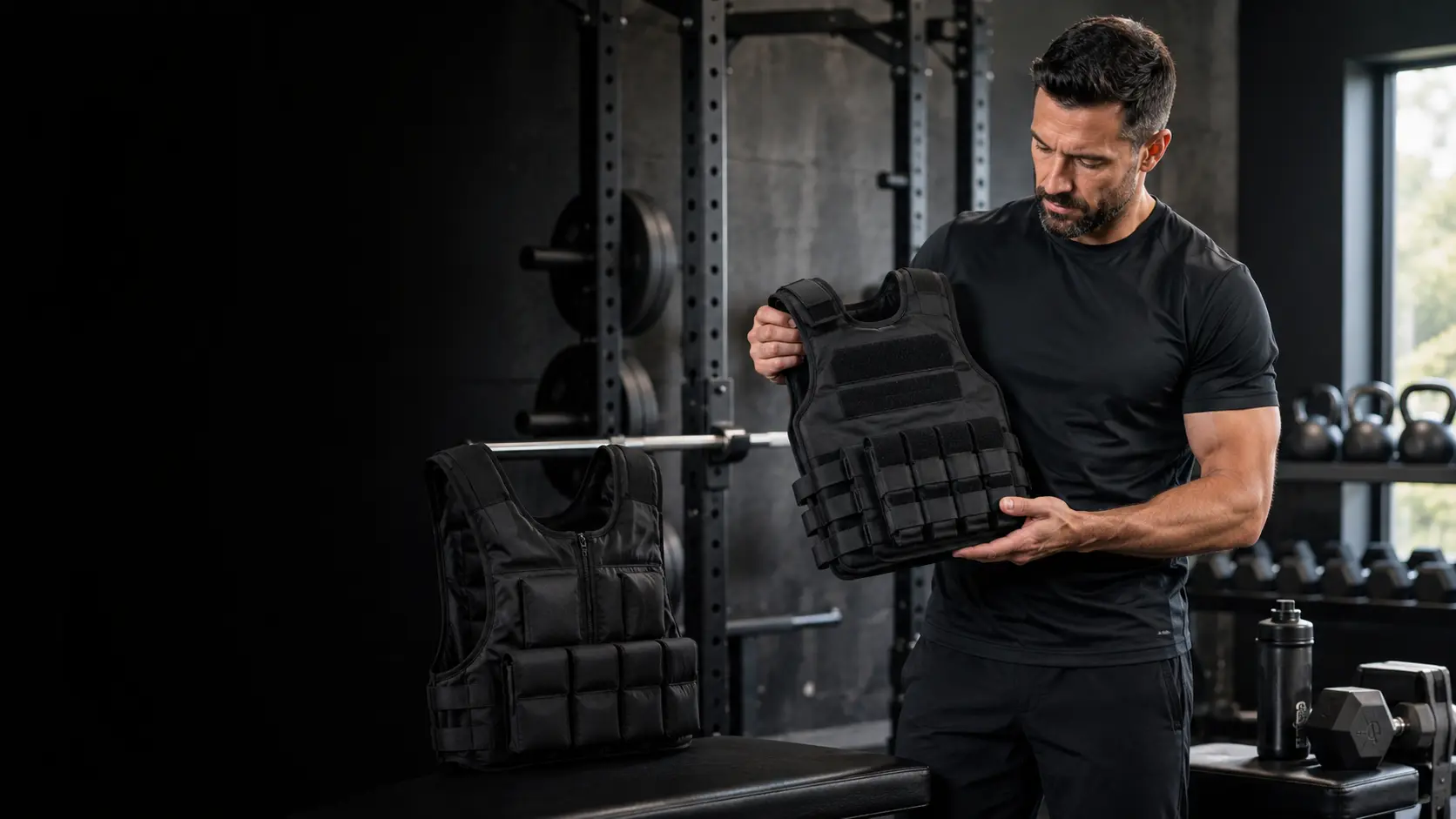
Choosing a weighted vest gets confusing fast. One vest holds 10 pounds. Another holds 40. Some use small removable weights. Others use rigid plates. A few come in several actual sizes, while others claim one adjustable shell can fit almost everyone.
That is why the best place to start is not with a brand or a maximum weight. Start with what you actually want the vest to do.
A good weighted vest should give you useful resistance without constantly reminding you that you are wearing it. It should stay close to your torso, match the movements you plan to perform, offer the right amount of progression, and make sense once you calculate the full cost.
Do not buy for maximum capacity first. Buy for your primary activity, realistic load range, fit, and progression needs.
In this buyer’s guide, I will show you how to choose a weighted vest based on activity, loading system, fit, weight capacity, adjustment size, stability, comfort, construction, and total cost. By the end, you should know what type of vest belongs on your shortlist before you start comparing individual models.
On This Page Weighted Vest Buyer’s Guide
Start With the Activity You Will Actually Do
A weighted vest that works well for slow walking may not be the vest you want for running, rucking, or fast bodyweight training. Your main activity should decide which features matter first.
Do not shop for the most capable-looking vest. Shop for the vest that best matches the movement you expect to perform most often.
Walking & Everyday Conditioning
For regular walking, comfort and stability usually matter more than extreme capacity. The vest should stay close enough to your torso that you are not constantly readjusting it during longer sessions.
- Stable torso fit
- Balanced resistance
- Breathable contact areas
- Manageable weight increments
- Easy adjustment
Running
Running makes poor fit easier to notice. Extra bulk, vertical bounce, or loose resistance can become distracting quickly once your pace increases.
- Close torso fit
- Low-profile construction
- Light starting resistance
- Minimal vertical bounce
- Free arm movement
Rucking
For longer loaded walks, durability and load support become more important. You want the resistance held securely and distributed in a way that remains stable as your session gets longer.
- Durable construction
- Front-to-back balance
- Supportive shoulder design
- Secure weight retention
- Useful load capacity
CrossFit, Murph & Calisthenics
Pull-ups, push-ups, burpees, squats, and running demand a vest that stays close without getting in the way of your shoulders or changing position every time you move.
- Secure plate retention
- Compact torso profile
- Shoulder mobility
- Stable side adjustment
- Low movement inside the vest
Strength & General Conditioning
If you want one vest for squats, lunges, step-ups, push-ups, carries, walking, and circuits, versatility becomes more valuable than specialization.
- Adjustable resistance
- Multiple useful load levels
- Secure fit across movements
- Reasonable range of motion
- Easy weight changes

Match the Vest to the Movement
If you cannot clearly say what activity the vest is mainly for, you are not ready to compare brands yet. Decide the movement first, then compare the features that support it.
Choose a Useful Load Range, Not the Highest Capacity
Maximum capacity is easy to compare because it gives every vest one big number. But that number matters only if it overlaps with the resistance you will realistically use.
One of the easiest ways to overspend on a weighted vest is to assume that a higher maximum load automatically means a better product. A 40-pound or 60-pound capacity may sound impressive, but it adds little value if nearly all of your training will happen well below that range.
Instead of shopping around one maximum number, think about three separate load numbers: what you can sensibly begin with, the range you are likely to use most often, and the highest resistance you may realistically progress toward.
What Can You Control Now?
Your starting resistance should allow you to keep normal posture, range of motion, breathing, and movement quality without the vest constantly shifting or changing how you perform the activity.
Where Will Most Sessions Happen?
This is often the most useful number for buying. Think about the resistance range you realistically expect to use across walking, strength work, conditioning, or whatever activity brought you to the vest.
How Much Room Do You Really Need?
Maximum capacity matters when you genuinely expect to progress toward it. Otherwise, extra capacity can mean more shell, more pockets, more hardware, more bulk, or more cost without improving your normal training.
More Capacity Is Not Automatically More Useful
If you expect most of your training to fall roughly between 5 and 15 pounds, a stable, well-fitting 20-pound adjustable vest may already provide enough room to progress.
The better buy is the vest whose usable range, fit, and adjustment system match your training, even if another model can hold much more.
Can I start light enough?
Does it cover my normal training range?
Is there reasonable room to progress?
Does extra capacity add unwanted bulk?
Buy enough capacity for realistic progression, not hypothetical progression. The useful part of the vest is the load range you can actually control and repeatedly train with.
Fixed vs Adjustable vs Plate Carrier
Most weighted vests fall into three broad loading systems. The important difference is not simply how they look. It is how easily you can change resistance, how compact the load feels, and how well the system matches the way you plan to train.
“Adjustable” does not describe one single design. A vest using many small removable weights behaves very differently from a vest that changes resistance by swapping rigid front and rear plates.
Fixed-Weight Vest
The resistance is built into the vest. If you buy a 12-pound version, it remains a 12-pound vest unless the manufacturer specifically provides another adjustment mechanism.
Walking, basic conditioning, and buyers who already know the resistance they want.
Simple. No plates, packets, or loading setup before your session.
Your training cannot meaningfully grow lighter or heavier with the same vest.
Adjustable Weighted Vest
Resistance comes from removable inserts, packets, bars, blocks, steel weights, or another modular system. You can reduce or increase the load without replacing the entire vest.
Beginners, walking, mixed training, gradual progression, and buyers using several loads.
Greater control over resistance and usually more flexibility between activities.
More pockets or inserts can increase bulk, and poorly secured weights may shift.
Plate Carrier Style Vest
These vests typically use a larger training plate in the front and another in the back. The load can stay compact against the torso, especially during dynamic bodyweight training.
CrossFit, Murph, calisthenics, heavier training, and some forms of rucking.
Compact loading with fewer individual weights to manage.
Resistance changes are often larger, and plates may need to be purchased separately.

Which Loading System Fits You?
| Buying Factor | Fixed | Adjustable | Plate Carrier |
|---|---|---|---|
| Change Resistance | No | Yes, often in smaller increments | Yes, by changing plates |
| Progression Control | Low | High | Moderate |
| Setup Simplicity | Excellent | Good | Good |
| Fine Weight Changes | None | Often Excellent | Usually Limited |
| Higher-Load Potential | Depends on model | Depends on design | Often Strong |
| Typical Buyer | Wants simplicity | Wants versatility | Wants compact plate loading |
Never Compare Vest Prices Until You Know Whether the Resistance Is Included
Some fixed and adjustable vests include their listed resistance. Plate-style systems may be sold as an empty shell, as a complete kit, or in several plate configurations. A lower vest-only price can therefore become the more expensive setup once the usable load is added.
Which Type Should Move Forward?
Want one predictable resistance with almost no setup?
Consider FixedWant to start lighter and increase resistance gradually?
Consider AdjustableWant compact front-and-back loading for dynamic or heavier training?
Consider Plate-BasedChoose the loading system that matches how often and how precisely you need to change resistance. Fixed favors simplicity, adjustable favors progression, and plate-based systems favor compact loading.
Shell Size and Strap Adjustment Are Not the Same Thing
A weighted vest can have plenty of adjustment and still be the wrong shape for your torso. Straps help fine-tune the fit, but the shell itself determines how much of your chest, abdomen, shoulders, and sides the vest occupies.
Straps should fine-tune a suitable shell. They should not be doing all the work of making an oversized, undersized, too-long, or badly positioned vest feel wearable.
Shell Size
Shell size describes the actual body of the vest: its torso length, width, shoulder spacing, side coverage, and where the loaded sections sit against you.
- How high or low the vest sits
- Shoulder placement
- Torso coverage
- Arm clearance
- Breathing space
- Where the load rests on your body
Strap Adjustment
Shoulder, waist, side, sternum, or cummerbund adjustments help pull the vest closer to your torso and refine how tightly it sits once the basic shell shape is appropriate.
- Snugness against the torso
- Minor height adjustment
- Side-to-side movement
- Vertical bounce
- Front-to-back tension
- Fit over different clothing layers

What Should a Weighted Vest Fit Like?
The vest should stay close without forcing you to over-tighten every adjustment point.
The shell should not ride into the base of your neck when standing, walking, or bending.
Arm swing, pressing, pulling, and overhead movement should not feel unnecessarily blocked.
You should still be able to take a full, controlled breath without excessive chest pressure.
Walk, squat, bend, and move your arms. The vest should not repeatedly lift away from your torso.
The weighted section should remain positioned consistently instead of hanging excessively low.
Neither System Is Automatically Better
What matters is whether the manufacturer gives you enough information to judge whether the vest's actual dimensions and adjustment range suit your body.
One-Size Designs
These rely heavily on adjustable shoulders, waist straps, side straps, or a cummerbund to accommodate different users.
Check carefully:- Shell dimensions
- Adjustment range
- Torso length
- Return policy
Multi-Size Designs
Separate sizes may offer a better starting shell proportion for different body dimensions before the straps are adjusted.
Check carefully:- Manufacturer size chart
- Measurement method
- Size overlap
- Exchange policy
Check More Than Your T-Shirt Size
Follow the manufacturer's exact measurement method.
Consider where the lower edge of the shell will sit.
Check whether straps and shell width leave useful mobility.
A vest can feel different once its working weight is installed.
Do Not Ignore These Just Because the Straps Tighten
Shell repeatedly rides into your neck
Lower edge hangs too far down your torso
Shoulder movement is noticeably restricted
You must overtighten straps to stop bouncing
Loaded vest shifts significantly while walking
Breathing feels restricted by the fitted shell
Choose the shell first, then use the straps to refine it. A wide adjustment range is useful, but it should not distract you from torso coverage, shoulder position, movement freedom, and stability.
Weight Distribution and Stability Matter More as You Move
A vest can fit correctly while standing still and still become frustrating once you walk, squat, run, climb stairs, or perform bodyweight exercises. Good loading is not just about total pounds. The resistance should sit in sensible positions and remain controlled as your body changes direction.
A stable vest should move with your torso, not noticeably against it. Pay attention to both where the resistance is positioned and how securely the vest holds that resistance during the movements you actually plan to perform.
Weight Distribution
Distribution describes how the resistance is spread across the vest. Depending on the design, weight may sit on the front and back, around the torso in multiple small pockets, or primarily in one loaded zone.
- Front-to-back loading
- Left-to-right symmetry
- How high or low the load sits
- Whether one area feels disproportionately heavy
- Whether weight can be distributed manually
Load Retention
Retention describes how securely the vest holds its plates, bars, packets, blocks, or built-in weights. Good retention matters more as movement becomes faster, more repetitive, or more directional.
- Plate-pocket closures
- Internal retention straps
- Zippers, Velcro, or locking systems
- Movement inside individual weight pockets
- Whether inserts can work loose over time
Three Very Different Loading Experiences
Front + Back Load
Resistance is shared between the front and rear rather than concentrated heavily in one direction.
Front-Heavy Load
More resistance is concentrated toward the front, which may change how the vest feels and how your torso responds to the added load.
Moving Load
The vest or the weights inside it shift separately from your torso as you change speed, direction, or body position.
The 60-Second Stability Test
If you can try the vest in person, or immediately after delivery while keeping it returnable, use a few simple movements to see whether the loaded vest stays under control.
Take several normal steps and notice vertical bounce.
Check whether the lower vest shifts, folds, or digs in.
Bend forward and see whether the load pulls away from your torso.
Move your arms overhead and across your body.
Turn and step sideways while noticing lateral shifting.
The vest does not need to feel motionless. But repeated bouncing, large side-to-side movement, plates lifting inside their pockets, or constant readjustment are signs to investigate before keeping it.
How Important Is Stability for Your Training?
| Activity | Stability Priority | What to Watch |
|---|---|---|
| Walking | Important | Repetitive bounce over longer sessions |
| Running | Very High | Vertical bounce and lateral movement |
| Rucking | Very High | Load balance and long-duration shifting |
| CrossFit / Murph | Very High | Plate security during fast position changes |
| Controlled Strength Work | Important | Load position through full range of motion |
What Should You Look for Before Buying?
Marketing copy may simply say a vest is “secure.” Look for the actual construction details that explain how it achieves that stability.
Where are the plates, packets, or weighted panels?
What physically prevents the resistance from moving?
Can the vest be pulled securely against your body?
Can left, right, front, and rear loading stay balanced?
Look specifically for feedback about bounce and shifting.
Confirm you can evaluate loaded fit without getting stuck.
Do not judge stability while standing still. Look at how the weight is distributed, how the resistance is retained, and whether the loaded vest stays controlled through the movements you actually intend to train.
Weight Increment Size Controls How Precisely You Can Progress
Two adjustable vests can have the same maximum capacity and still offer very different progression. One may let you add resistance in small steps, while another may require a much larger jump every time you want to go heavier.
Do not ask only, “How much weight can this vest hold?” Also ask, “How much weight must I add or remove each time I want to change the resistance?”
This matters most when you are starting light, using the vest for walking, progressing cautiously, or sharing one vest across several types of training. Smaller increments give you more stops between the minimum and maximum load.
Larger jumps are not automatically bad. A plate-based vest may be exactly what you want for a workout built around a specific load. The question is whether its available resistance levels match the way you intend to progress.
Small vs Large Weight Increments
These numbers are only an illustration. The point is that maximum capacity alone does not tell you how many useful resistance levels a vest provides.

Who Benefits Most From Smaller Steps?
Beginners
Smaller changes make it easier to move away from your starting load without being forced into a disproportionately large jump.
Walking & Longer Sessions
A small increase can be enough to noticeably change a longer weighted walk, so fine adjustment may be more useful than a very high maximum capacity.
Fixed-Load Training
If your training revolves around one established resistance, having ten small intermediate settings may provide little practical value.
Four Numbers Buyers Often Confuse
What the shell weighs before removable resistance is added.
The total resistance supplied in the package you are actually buying.
The smallest practical amount you can add or remove when adjusting the vest.
The heaviest configuration the manufacturer says the vest is designed to support.
Why “Adjustable” Can Mean Very Different Things
The current ELITE uses many small removable steel weights, allowing very fine changes in resistance compared with a large-plate system.
Hyperwear currently lists the FIT as adjustable from ½ pound up to 10 pounds using removable half-pound weights.
5.11 currently offers training plates in several substantial plate weights, illustrating how a plate system can provide fewer, larger loading steps.
Count the Usable Stops
Look at your expected starting load and likely upper training load, then count how many practical resistance settings the vest gives you between those two points.
Check the Adjustment System Carefully
What is the smallest removable weight?
Can resistance be removed symmetrically?
Are extra weights included or sold separately?
Can you reach your intended starting load?
How long does changing the load take?
Will small weights stay secure once installed?
Smaller Increments Are Useful Only If the Rest of the Vest Works
A vest does not become a better purchase simply because it offers tiny load adjustments. Fit, stability, weight distribution, comfort, durability, and the resistance range you actually need still matter. Increment size is one buying filter, not the whole decision.
Prefer an increment size that matches how precisely you expect to progress. Smaller steps offer more control; larger plate changes can be perfectly appropriate when your training uses established heavier loads.
Comfort Matters More Than Padding Alone
Thick shoulder pads can look reassuring on a product page, but padding cannot fix a shell that is too long, a vest that traps excessive heat, a neckline that rubs, or a load that constantly pulls away from your torso.
Judge comfort while moving, not while standing in front of a mirror. A weighted vest should remain tolerable through the duration and movement demands of the activity you actually bought it for.
Six Things to Evaluate Together
Shoulder Pressure
Wider, shaped, or padded straps may spread pressure, but comfort still depends on total load, shell fit, and where the resistance sits.
Chest Compression
A secure vest should stay close without requiring so much tension that normal chest expansion and breathing become uncomfortable.
Neck Clearance
The neckline and shoulder straps should remain clear enough that repeated arm movement does not push the shell into the base or sides of your neck.
Breathability & Heat
Every vest adds material around your torso. Open sides, mesh contact panels, smaller coverage areas, and breathable fabrics can reduce how enclosed the vest feels.
Torso Coverage
More surface area can help spread resistance, while a smaller shell may improve cooling and mobility. Neither approach is automatically more comfortable.
Range of Motion
The shell, straps, plates, and pockets should leave enough room for the movements that matter in your training.
More Padding Is Not Automatically More Comfortable
Extra padding can reduce pressure at contact points, especially under heavier loads. But it can also add thickness, trap more heat, increase bulk, or change how closely the vest sits against your body.
Instead of asking whether a vest has “good padding,” ask whether its padding makes sense for the load, activity, and shell design.
- Shoulder pressure
- Hard plate edges
- Longer loaded sessions
- Contact-point comfort
- Wrong shell size
- Poor load balance
- Excessive bouncing
- Restricted movement
Look at Airflow Before You Look at Marketing Words
“Breathable” can describe fabric, mesh, side openings, reduced torso coverage, or a combination of those features. Look at how the whole vest is constructed.
Less material around the rib cage can provide additional space for airflow and torso expansion.
Mesh-backed shoulder or body panels can reduce the sealed-in feel of solid padded contact surfaces.
Less torso coverage may improve cooling, although it can also change how resistance is distributed.
Stretch, lining, thickness, and material choice can influence how flexible and enclosed the vest feels.
There is no completely cool weighted vest. You are adding load and material around your torso. The goal is to choose a design whose heat and coverage are reasonable for your environment and session length.
Can You Perform Your Real Workout in It?
A vest can feel comfortable during a fitting and become irritating as soon as your shoulders, hips, or torso start moving through larger ranges.
A 10-Minute Vest and a 60-Minute Vest May Need Different Priorities
Brief Strength Sets
Compact loading and movement freedom may matter more than maximizing airflow.
Prioritize: Stability + mobilityCircuits & Conditioning
Pressure points, bounce, heat, and quick adjustment become easier to notice.
Prioritize: Fit + retention + ventilationWalking & Rucking
Small annoyances have more time to become meaningful, especially rubbing, shoulder pressure, and heat.
Prioritize: Pressure + airflow + load supportComfort Should Be Judged Under Real Movement
Our weighted-vest evaluation framework considers pressure points, rubbing, heat, airflow, fit, stability, and freedom of movement rather than treating padding as a standalone comfort score.
Choose comfort for the activity and session length, not for the amount of padding in the product photo. Pressure distribution, breathing room, neckline, airflow, torso coverage, and movement freedom all matter once the vest is loaded.
Inspect Construction and Weight Retention
Most weighted vests look durable in a product photo. The more useful clues are found at the places that deal with repeated load: shoulder connections, weight pockets, plate closures, buckles, zippers, seams, and adjustment hardware.
Do not judge durability from fabric name alone. A strong outer material still depends on stitching, attachment points, closures, pocket construction, hardware, and how securely the resistance is retained.
Nine Areas Worth Inspecting
Shoulder Attachments
Look at where the shoulder straps connect to the main shell. These areas repeatedly support the loaded vest during lifting, walking, and movement.
Look for reinforced stitching and clean joins.Weight-Pocket Seams
Removable-weight designs place repeated pressure on individual pockets, especially when many small inserts are packed tightly into the shell.
Look for secure seams around loaded pockets.Plate / Weight Retention
The resistance should have a clear physical system that prevents plates, bars, packets, or inserts from working loose as you move.
Look for straps, deep pockets, secure flaps, or closures.Side Adjustment Hardware
Buckles, side straps, elastic cords, and cummerbunds repeatedly handle tension as the vest is tightened, removed, and re-adjusted.
Look for stable attachment and easy adjustment.Zippers
Front-zip designs should open and close cleanly without the loaded vest placing obvious strain on the zipper track or surrounding fabric.
Look for smooth operation and reinforced zipper areas.Hook-and-Loop Closures
Plate flaps and accessory pockets often depend on hook-and-loop closures, so check the size and placement of the contact area.
Look for enough closure area to stay secure under load.Grab Handles
If the vest has a handle, consider whether it looks properly integrated into the shell rather than attached as a lightly stitched afterthought.
Look for reinforcement around the handle base.Outer Material
Fabric type and denier can help describe the shell, but they should be considered alongside flexibility, abrasion exposure, lining, and overall construction.
Treat fabric specs as one durability clue, not proof.Internal Finish
Check interior seams, lining, pocket edges, exposed hardware, and areas that will repeatedly contact your body or clothing.
Look for clean finishing without obvious rough edges.
How Is the Resistance Actually Held in Place?
Different loading systems need different retention. Before buying, identify what physically stops the resistance from moving or escaping its intended position.
Small Inserts
Multiple small weights may rely on individual pockets, elastic tension, flaps, zippers, or close-fitting sleeves.
Weight Packets
Larger packets usually need sufficiently deep pockets and reliable closures to stop the load from shifting or lifting out.
Rigid Plates
Plate carriers may use internal straps, hook-and-loop flaps, fitted compartments, or combinations of retention features.
What Does Fabric Denier Tell You?
Product pages may list materials such as 500D CORDURA, 600D polyester, or 1000D CORDURA. Those specifications help describe the textile construction, but a larger number should not automatically become your durability ranking.
A weighted vest also needs sensible stitching, secure load pockets, appropriate hardware, good pattern construction, and enough flexibility for its intended use.
Use material specs to understand construction.
Compare exterior and skin-facing materials separately.
Check how the material is used at high-stress areas.
Do not assume the highest denier automatically wins.
Different Designs Use Different Construction Solutions
GORUCK Rucking Weight Vest
- 500D CORDURA exterior
- 210D CORDURA interior
- Front and rear plate panels
- Designed to keep weight snug to the body
Useful example of combining a durable outer shell with a softer interior material and secure plate-focused construction.
GORUCK Training Weight Vest 2.0
- 1000D CORDURA on most current versions
- 210D CORDURA interior
- Ballistic-nylon plate closure
- Front and rear plate slots
Shows how material choice and the plate-enclosure system can both be part of the construction story.
5.11 TacTec Trainer
- 600D polyester construction
- Internal plate-retention straps
- Adjustable stretch cummerbund
- Hook-and-loop front pocket closure
Illustrates that the retention method and adjustment hardware deserve attention alongside the fabric spec.
Hyperwear Hyper Vest ELITE
- Two-way stretch CORDURA fabric
- Small galvanized-steel weights
- Multiple weight pockets
- Elastic side-lacing adjustment
A very different construction strategy built around many small weights rather than large rigid plates.
Construction Details That Deserve a Closer Look
No clear explanation of how removable weights are secured
Vague material descriptions with no useful construction details
Thin-looking strap attachments around major load points
Loose or shallow weight pockets in product imagery
No explanation of compatible replacement weights or plates
Exposed hard edges where the vest contacts your body
Poorly explained cleaning and care instructions
Unclear warranty or return information
Can the Manufacturer Answer These Questions?
Strong product documentation does not guarantee a great vest, but vague documentation makes it harder to judge what you are actually buying.
What is the shell material?
How are the weights retained?
Are weights or plates included?
What loads are compatible?
How should the vest be cleaned?
Are replacement components available?
What does the warranty cover?
What is the return policy?
Construction Is More Than a Fabric Specification
Our weighted-vest evaluation framework looks at materials, stitching, adjustment hardware, closures, weight retention, loaded stability, durability signals, and practical use together rather than awarding quality based on one headline material.
Inspect the system, not just the fabric. A good weighted vest needs secure resistance, durable stress points, reliable adjustment hardware, sensible closures, and construction that matches the load and activity you plan to use.
Calculate the Complete Setup Cost
The price shown beside a weighted vest is not always the amount you need to spend before you can train at your intended load. Some products arrive ready to use. Others require separate plates, additional weights, or accessories before the setup matches your goal.
Compare complete configurations, not empty shells. Before calling one vest cheaper than another, calculate what each option costs at the resistance level you actually intend to use.
Advertised Price Is Only the Starting Point
Seven Things That Can Change the Real Price
Base Vest
Start with the price of the exact shell, size, color, or configuration you are considering.
Is this vest-only pricing?Included Resistance
Confirm exactly how many pounds of usable resistance arrive in the package rather than assuming the vest's maximum capacity is included.
How much usable weight arrives?Additional Weights
If your target load exceeds what is included, calculate the cost of the extra compatible plates, bars, packets, or inserts.
What will my target load cost?Required Accessories
Distinguish optional add-ons from items you actually need for your intended use, storage, hydration, or loading setup.
Is the accessory optional or necessary?Shipping
Heavy steel plates can affect delivery costs, so compare the final cart total when shipping is not already included.
What is the delivered price?Replacement Parts
Check whether compatible weights, straps, plates, or other replaceable components remain available separately.
Can I replace rather than rebuy?Returns, Exchanges & Warranty
Fit is difficult to judge from specifications alone. A good return or exchange policy can have real value when two products are otherwise close in price, especially if the vest uses a specific shell size or proprietary loading system.
Three Common Buying Scenarios
The listed price may be close to the actual ready-to-train cost because the resistance is permanently built into the product.
The starting package may cover several resistance levels, but check whether additional proprietary weights are needed to reach the advertised maximum.
A competitive-looking shell price can become substantially different once the front and rear plates required for your intended load are added.
Price Every Vest at the Same Target Load
If your intended working configuration is 20 pounds, compare what each candidate costs when configured as close to 20 pounds as its system allows.
Compare Apples to Apples
| Cost Item | Vest A | Vest B | Vest C |
|---|---|---|---|
| Base Vest | Add price | Add price | Add price |
| Included Weight | Record lbs | Record lbs | Record lbs |
| Extra Weight Needed | Add cost | Add cost | Add cost |
| Required Extras | Add cost | Add cost | Add cost |
| Shipping / Applicable Fees | Add cost | Add cost | Add cost |
| Ready-to-Train Total | Compare | Compare | Compare |
Cheapest Setup Does Not Automatically Mean Best Value
Once you know the real cost, go back to the earlier buying filters. A slightly more expensive setup may make more sense if it gives you a better shell fit, smaller useful increments, stronger load retention, better comfort, or a loading range that fits your training more closely.
Compare what each vest costs at the load you actually intend to train with. Include the shell, required resistance, necessary accessories, and purchase costs before deciding which option offers better value.
Match Special Features to a Real Need
Pockets, reflective details, hydration compatibility, MOLLE panels, grab handles, quick-release systems, and other extras can be genuinely useful. They can also add cost, bulk, complexity, or material that does nothing for the way you train.
Every extra feature should solve a specific problem. If you cannot explain when, where, or why you would use it, do not let that feature become the reason you choose one vest over a better-fitting alternative.
Ask Three Questions Before Paying for an Extra
Will I Use It?
Identify a real training situation where the feature would make the vest easier, safer, or more practical for you to use.
Name the use case.What Does It Cost Me?
Consider not only price, but also extra material, added bulk, reduced airflow, maintenance, or another component that can wear out.
Identify the trade-off.Does It Improve the Core Vest?
A useful extra should not distract you from fit, stability, loading range, comfort, and secure resistance.
Core performance comes first.Which Extras Are Actually Useful for You?
Reflective Elements
Reflective strips, laces, or fabric can add useful visibility when you regularly walk or run outdoors before sunrise, after sunset, or in low-light areas.
Phone & Key Pockets
A secure quick-access pocket can be genuinely useful for walking or rucking when you do not want to carry a separate belt, pack, or phone holder.
Hydration Compatibility
Compatibility with a hydration carrier can be useful during longer outdoor sessions when carrying water separately would interfere with the vest or require another pack.
MOLLE / Attachment Panels
Modular webbing or laser-cut attachment areas let compatible pouches and accessories be added to some plate-style vests.
Easy On / Off Design
Front zippers, release handles, buckles, or easy-access cummerbunds can matter when you frequently remove the vest between sets or use it for short training blocks.
Grab / Hanging Handle
A reinforced handle can make a loaded vest easier to pick up, move, store, or hang while it dries after a sweaty outdoor session.
Broader Plate Compatibility
Some plate-style vests accept more than one plate system. That can be valuable if you already own compatible training plates or want more replacement options later.
Patch & Customization Areas
Name-tape or patch panels can help identify shared equipment or personalize a vest, but they rarely deserve priority over fit and performance.
Match Features to Your Actual Training
| Feature | Walking | Running | Rucking | CrossFit / Murph | General Strength |
|---|---|---|---|---|---|
| Reflective Details | Outdoor | Outdoor | Outdoor | Low | Low |
| Phone / Key Pocket | Useful | Conditional | Useful | Low | Low |
| Hydration Compatibility | Conditional | Conditional | Useful | Low | Low |
| MOLLE / Attachments | Low | Low | Conditional | Conditional | Low |
| Easy Removal | Useful | Useful | Useful | Useful | Useful |
| Broad Plate Compatibility | Low | Low | Conditional | Useful | Conditional |
These priorities are buying guidance, not fixed rules. Your actual environment and training routine should decide whether a feature moves up or down the list.
How Real Vests Package Extra Features
Hyper Vest ELITE
Hyperwear currently uses reflective strips and reflective side lacing on the ELITE, making those features relevant to buyers who train outdoors in lower-light conditions.
TacTec Trainer
5.11 currently includes an admin pocket, front and rear MOLLE areas, cummerbund pockets, and compatibility with its PC Convertible Hydration Carrier.
Rucking Weight Vest
GORUCK currently includes a magnetically enclosed quick-access chest pocket, a padded rear grab handle, and small cummerbund handles intended to make release easier.
More Features Can Make a Vest Worse for Your Use Case
Extra pockets, attachment panels, thick hardware, and accessory systems all require material and space. Depending on the design, that can mean more bulk, additional contact points, more things to adjust, or features sitting where you would rather have a cleaner training surface.
Extras Come After the Fundamentals
If two vests are close, useful secondary features can break the tie. They should rarely rescue a vest that already loses on the things that determine whether you will actually enjoy training in it.
Run This Quick Check
What exact problem does this feature solve for me?
How often will I realistically use it?
Does it add unwanted bulk or weight?
Does it interfere with my primary activity?
Is the feature included or does it need an accessory?
Would I still choose this vest without the feature?
Treat special features as tie-breakers, not foundations. First get the activity, load range, fit, stability, comfort, construction, and total cost right. Then pay attention to the extras that genuinely make your own training easier.
Common Weighted Vest Buying Mistakes
A well-made weighted vest can still be the wrong purchase. Most buying mistakes happen when one impressive feature, such as maximum capacity, padding, price, or a long feature list, gets more attention than how the vest will actually be used.
Buying the Specification Instead of the Use Case
Buy for the activity, load range, body fit, and progression you will actually use. Bigger numbers and longer feature lists should not override those fundamentals.
Buying for Maximum Capacity
A 40- or 60-pound maximum sounds impressive, but that capacity provides little value if your realistic training range stays far below it.
Higher capacity may require larger pockets, more material, additional hardware, or a bulkier shell that you carry during every session.
Do instead: Buy enough capacity for your realistic progression, not the largest number on the product page.
Assuming Adjustable Straps Equal Proper Sizing
Shoulder and side straps can change tension and position. They cannot completely change the length, width, neckline, or basic proportions of the vest shell.
You may tighten the vest around your chest while the shell still hangs too low, sits too wide, or interferes with your shoulders.
Do instead: Check shell dimensions, torso length, chest range, and shoulder position before relying on strap adjustment.
Ignoring Weight Increments
Two vests may both be described as adjustable while one changes in small increments and the other requires much larger jumps.
The vest may technically offer enough maximum capacity while still making your preferred progression awkward.
Do instead: Compare the smallest practical load change, not only the minimum and maximum resistance.
Buying a Running Vest for Heavy Rucking
Running generally rewards lower bulk, secure fit, and bounce control. Heavier rucking places greater emphasis on load support, durability, and longer-session stability.
A vest optimized around lighter, faster movement may not provide the load support or capacity you expect during heavier loaded walking.
Do instead: Let your primary activity decide which compromises make sense.
Buying a Plate Carrier When You Only Want to Walk
A plate carrier can absolutely add resistance to walking. That does not mean a rigid plate system is automatically the most practical option for a dedicated walker.
You may pay for heavier-duty construction or plate capacity while giving up smaller resistance changes, lighter construction, or simpler everyday use.
Do instead: Compare fixed and adjustable insert-style vests before deciding that you need plates.
Forgetting the Cost of Plates
The visible price of a carrier may represent only the shell. Your usable training setup may also require a front plate, rear plate, or other proprietary resistance.
The apparently cheaper product can become the more expensive option once resistance and required accessories are added.
Do instead: Compare the complete ready-to-train setup at the resistance you plan to use.
Ignoring Cleaning Instructions
Weighted vests collect sweat, skin oils, dust, and moisture, but cleaning instructions can vary significantly between shells and resistance systems.
Some models require hand washing or weight removal, while metal components and different fabrics can have their own care requirements.
Do instead: Read the exact manufacturer's care instructions before assuming the complete vest can go into a washing machine.
Choosing Features Instead of Fit
Storage pockets, MOLLE panels, reflective details, premium fabrics, and quick-release hardware can all sound valuable on a specification sheet.
None of those features fixes a shell that rubs your neck, shifts during movement, or does not suit your torso.
Do instead: Get activity, shell fit, stability, and loading system right before using extras as tie-breakers.
Assuming More Expensive Means Better
Premium materials, stronger construction, better adjustment, or a more refined fit can justify a higher price.
You can still overpay for capabilities, accessories, or construction features that provide little benefit for your own training.
Do instead: Compare what the additional cost improves for your specific use case.
Ignoring the Return Policy
Size charts and specifications can narrow the options, but they cannot perfectly predict how a particular vest will feel on your own torso once it is loaded.
Packaging, plate installation, workout use, sweat, removed weights, or other changes may affect whether a product remains eligible for return.
Do instead: Read the current return and exchange terms before changing the configuration or training in the vest.
Catch These Four Before Checkout
If you only have a minute before making a final comparison, confirm the four things most likely to turn an otherwise attractive vest into the wrong purchase.
The vest is built around a different kind of training.
The straps adjust, but the actual torso dimensions do not fit.
The increments or maximum capacity do not match your progression.
Plates or required extras change the apparent value.
The Five-Question Mistake Filter
Does this vest match my main activity?
Does the actual shell fit my torso?
Can I use the load range and increments?
Do I know the complete setup cost?
Have I checked care and return terms?
If you can answer all five clearly, you are ready to stop browsing specifications and start narrowing the shortlist.
Turn the Whole Guide Into a 60-Second Decision
You now have the individual buying filters. The next section combines them into one fast decision path from activity to final shortlist.
A good purchase is not the vest with the most impressive specification sheet. It is the vest whose activity match, shell fit, usable resistance, stability, maintenance, and complete cost make sense together.
Choose Your Weighted Vest in 60 Seconds
You do not need to compare dozens of products at once. Answer these questions in order and you can eliminate most unsuitable weighted vests before you ever start comparing individual models.
Activity comes first. Then decide whether you need adjustable resistance, how you want that resistance to change, how much future capacity you realistically need, whether the shell fits, whether the load stays stable, and what the complete setup costs.
What Will You Do Most?
Choose the activity that will account for most of your weighted-vest use.
Do You Need to Change the Weight?
Think about whether one resistance will cover most sessions or whether you want the vest to progress with your training.
How Do You Want the Resistance to Change?
Small adjustments and larger plate changes solve different training problems.
What Is Your Realistic Maximum?
Do not choose the biggest capacity just because it exists. Select the range you realistically expect to grow into.
Does the Actual Shell Fit Your Body?
Straps can fine-tune fit. They cannot completely change the shell's dimensions.
Does the Load Stay Where It Belongs?
Check both the way the vest sits on your torso and the way the resistance is retained inside it.
What Is the Total Setup Cost?
Compare what it costs to reach your actual working configuration, not simply the price of the empty vest.
Your Shortlist Direction
Based on your answers, start your shortlist here.
Your answers suggest prioritizing a versatile adjustable design.
Verify fit and stability before buying.
The Entire Decision in One Line
If a weighted vest still makes sense after those filters, it deserves a place on your shortlist.
Do not shortlist a vest until the activity, loading system, realistic capacity, shell fit, stability, and complete cost all make sense together. Once those filters are satisfied, individual product comparisons become much easier.
Real Weighted Vest Examples by Buyer Type
These products are here to make the buying framework concrete. They are not a second ranking of the best weighted vests. Each one represents a different answer to the activity, fit, loading, progression, and budget questions we have already covered.
Examples are not rankings. A product can make sense for one buyer and be the wrong choice for another. Use these cards to understand what a suitable design looks like for different priorities.
Hyper Vest ELITE
The ELITE uses many small removable steel weights across a fitted shell instead of relying on one large front and rear plate pair. It also comes in multiple actual shell sizes.
- Small through X-Large shell sizes
- 2.25 oz removable steel weights
- Size-dependent maximum capacity
- Stretch CORDURA construction
Fine resistance changes and a close-fitting multi-size shell make it useful when versatility matters more than extreme maximum capacity.
Premium positioning and lower maximum capacity than many heavy plate or packet-based systems.
Rucking Weight Vest
GORUCK builds this vest around front and rear plate loading, rugged materials, and a close torso position intended specifically for weighted movement.
- Front and rear loaded panels
- Approx. 14, 20, or 30 lb loaded setups
- 500D CORDURA exterior
- 210D CORDURA interior
Front-and-back loading, durable construction, and a rucking-focused fit line up naturally with longer loaded walks.
Plate configurations provide much larger resistance changes than micro-loading systems, and storage is more limited than with a traditional rucksack.
TacTec Trainer
The TacTec Trainer uses front and rear training plates with internal retention straps, adjustable shoulders, body padding, and an adjustable stretch cummerbund.
- Front and rear training-plate system
- Internal plate-retention straps
- Adjustable shoulder straps and cummerbund
- 600D polyester construction
Compact rigid loading and dedicated plate retention make sense for workouts that combine running with frequent body-position changes.
The standalone vest and the resistance configuration must be compared carefully because compatible plates or a complete kit can change the total setup cost.
Hyper Vest FIT
The FIT combines a women-specific shape with three actual shell sizes and removable half-pound resistance, giving buyers another option beyond one-size adjustable designs.
- Small, Medium, and Large
- ½-lb removable increments
- Adjustable up to 10 lb
- Elastic side-cord fit adjustment
Multiple shell sizes and smaller resistance changes are useful when precise fit and gradual progression matter more than heavy loading.
The 10 lb maximum means it is not designed for buyers whose long-term goal is substantially heavier weighted training.
20-lb Adjustable Weighted Vest
CAP uses multiple removable steel-shot packets rather than rigid training plates, allowing buyers to reduce the load and work toward the vest's 20 lb capacity.
- Up to 20 lb resistance
- Removable steel-shot packets
- Approx. 0.75 lb per packet
- Adjustable one-size design
It demonstrates how removable resistance can provide useful progression without requiring a separate plate-based ecosystem.
Multiple packet pockets create a bulkier construction than premium low-profile designs, and the one-size shell deserves careful fit checking.
Classic X-Shaped Vest
The Classic X-Shaped vest uses built-in iron-sand resistance and is sold in several preset weights, so there are no plates or individual packets to manage during normal use.
- Fixed-weight construction
- Preset options from 6 to 30 lb
- Adjustable buckle straps
- Iron-sand resistance
It makes sense for someone who already knows the resistance they want and values simple grab-and-go use over progressive loading.
The resistance cannot be reduced when a session calls for less load or increased later as training becomes easier.
Notice What Changes From Buyer to Buyer
| Buyer Type | Design Direction | Main Priority | Main Compromise |
|---|---|---|---|
| Versatile Training | Low-profile adjustable | Fine progression | Lower heavy-load capacity |
| Rucking | Durable front/rear load | Support + stability | Larger load changes |
| CrossFit / Murph | Secure plate system | Retention + mobility | Plate cost / less micro-loading |
| Smaller Frames | True sizing + small increments | Fit + controlled progression | Lower maximum resistance |
| Budget Adjustable | Removable packet system | Adjustable resistance | More bulk |
| Simple Walking | Fixed-weight vest | Simplicity | No load progression |
There Is No Universal Best Vest Design
The ELITE's small increments are useful for one buyer. GORUCK's heavier front-and-rear loading makes more sense for another. A fixed ZELUS vest can be perfectly logical for someone who values simplicity, while a TacTec-style plate system may suit dynamic training much better.
The product only becomes a good choice when its compromises match the compromises you are willing to make.
Compare Our Best Weighted Vests of 2026
P3 teaches you how to choose. P1 applies those criteria to actual products across walking, rucking, CrossFit, running, general training, fit, loading systems, and value.
Research-Based Examples, Not Hidden Hands-On Claims
These examples use current manufacturer specifications, intended use, construction details, loading systems, fit information, and our published evaluation framework. A product is only described as personally tested when that specific product has genuinely been tested by us.
Run the Complete Buying Checklist Before Checkout
You now know what type of vest fits your needs and what real examples look like. The next step is making sure no important purchase detail has been missed.
Weighted Vest Buying Checklist
You have already narrowed down the right type of weighted vest. Now confirm the details that can turn a promising option into either a smart purchase or an expensive mistake.
Do not buy until you can confidently answer the important questions about activity, load, fit, stability, comfort, and complete cost. A single unresolved detail can be more important than ten attractive product features.
Work Through Every Category
The goal is not to check boxes quickly. It is to make sure there are no important unknowns hiding behind an attractive product page.
Resolve the Unknown Before Buying
If weight, sizing, or safe progression is still unclear, use our detailed beginner guide. If the checklist is complete and you are ready for actual models, compare our current weighted vest recommendations.
If you can confidently check these boxes, you are no longer guessing. You are choosing. The right vest is the one whose activity match, usable load, fit, stability, comfort, and complete cost work together.
Frequently Asked Questions About Choosing a Weighted Vest
Still comparing options? These answers cover the decisions that most often matter at the end of the buying process, from vest type and sizing to load, comfort, included weights, and overall value.
Choose the vest that fits your primary activity, body, realistic resistance range, and progression plan. Then compare stability, comfort, construction, included resistance, and complete setup cost. Extra features should come after those fundamentals.
Start with your primary activity. A vest for walking does not need exactly the same design priorities as one for running, rucking, Murph, or heavy strength work.
Once the activity is clear, evaluate the loading system, usable resistance range, shell dimensions, loaded stability, comfort, construction, and complete cost. That sequence eliminates unsuitable models faster than comparing feature lists first.
Neither is automatically better. Fixed-weight vests are simple: choose the resistance, put the vest on, and train. They can make sense when you already know the load you want and rarely need to change it.
Adjustable vests make more sense when you want to start lighter, progress over time, or use different resistance for different workouts. The important detail is the increment size because two adjustable vests can offer very different progression.
There is no single correct vest weight for every person or every activity. Your starting load should be manageable enough that you can maintain normal movement and gradually adapt instead of buying according to maximum capacity.
Harvard Health's weighted-walking guidance suggests keeping starting resistance conservative and gives roughly 10% of body weight as a starting reference for rucking. Your activity, training experience, comfort, and health situation can change what is appropriate.
A weighted vest should sit snugly and securely against your torso without constantly shifting, but it should not be tightened so much that normal breathing or movement becomes restricted.
Check more than chest circumference. Torso length, shoulder position, neckline, shell width, and whether the brand offers true shell sizes can all affect how the vest behaves once loaded.
No. A one-size design can offer a wide adjustment range, but the underlying shell dimensions remain largely fixed. Tightening straps changes tension, not the basic length and width of the vest.
A multi-size vest can change more of the actual shell geometry. For example, Hyperwear currently sells the Hyper Vest ELITE in Small, Medium, Large, and X-Large sizes with different published fit ranges and size-dependent weight capacities.
Neither system automatically fits better. The important question is whether the actual shell and adjustment range match your body.
Choose according to how you want the resistance distributed and adjusted.
Plate-style vests can provide compact, rigid front-and-rear loading and make sense for activities such as Murph, CrossFit, heavier conditioning, and some rucking setups.
Pocket-style adjustable vests can spread many smaller weights around the torso and may provide finer progression, which can be especially useful for walking, general training, and buyers who want smaller load changes.
Sometimes, but a versatile vest still involves compromises.
Running places more emphasis on low bulk and bounce control. Rucking can place more emphasis on durable support and useful heavier capacity. CrossFit and Murph demand secure resistance and freedom through movements such as pull-ups, burpees, squats, and running.
If you want one vest for several activities, prioritize the activity you perform most and make sure the compromises remain acceptable for the others.
No. Never assume that maximum capacity means the resistance is included.
Some vests arrive with built-in or removable weights, some are sold as unloaded shells, and some manufacturers offer both standalone carriers and complete weight kits.
For example, 5.11 currently lists its TacTec Trainer vest and PT-R plate pair as separate products while also selling complete TacTec weight kits in some configurations.
Not necessarily. Padding can reduce pressure at contact points, especially around the shoulders, but comfort depends on the entire system.
A heavily padded vest can still be uncomfortable if the shell is too long, the neckline rubs, the load shifts, the chest is overtightened, or the design traps more heat than you are comfortable with.
It can be, but only when the extra cost improves something that matters to your use case.
Premium pricing may buy better materials, more refined sizing, smaller weight increments, stronger retention, improved hardware, or a cleaner low-profile design. Those advantages provide little value if you do not need them.
Compare the complete loaded setup and ask what the extra money actually improves for your activity. Price alone is not a quality score.
Move From Buying Criteria to Specific Weighted Vests
Use the framework from this guide to compare researched weighted vest options for walking, rucking, CrossFit, running, general fitness, different body types, and different budgets.
Choose the Vest That Fits Your Training, Not the Spec Sheet
Learning how to choose a weighted vest becomes much easier once you stop looking for one universal best design. The right answer changes with your activity, body, loading preference, progression plan, and budget.
Narrow the Field in This Order
Different Buyers Should Reach Different Answers
Walking
A comfortable adjustable vest with manageable resistance, stable torso contact, and useful progression may make the most sense.
Prioritize comfort + stabilityRunning
A lighter, close-fitting, low-profile design with secure resistance and minimal bounce usually deserves more attention than maximum capacity.
Prioritize fit + low bulkRucking
Durable construction, front-to-back balance, secure loading, supportive fit, and useful heavier capacity become more important.
Prioritize support + durabilityCrossFit / Murph
Compact loading, reliable plate retention, upper-body freedom, and a shell that stays close during dynamic movement usually matter most.
Prioritize retention + mobilityThe best weighted vest is not the one with the biggest number on the product page. It is the one you can load appropriately, fit securely, move naturally in, and keep using for the training you actually do.
Three Guides, Three Different Jobs
Go deeper on starting resistance, sizing, progression, fit, and safe-use considerations.
Match the vest type, fit, loading system, capacity, stability, features, and cost to your needs.
Apply the buying criteria to researched individual models and training goals.
How This Guide Was Fact-Checked
This buyer's guide combines our published research-based weighted-vest evaluation framework with current manufacturer specifications and relevant exercise guidance.
Product configurations, prices, included weights, bundles, warranties, return terms, and availability can change. For product-specific facts, we prioritize current manufacturer information and recommend verifying the exact configuration before purchasing.
VestWeightVest Research & Methodology
Independent Evidence
Official Manufacturer Sources
Loading configurations, materials, sizing, panel dimensions, and plate-retention details.
5.11 Tactical TacTec Trainer Weight VestMaterials, plate compatibility, retention, shoulder adjustment, padding, and cummerbund.
Hyperwear Hyper Vest ELITEShell sizes, micro-loading system, materials, available resistance, and adjustment design.
Hyperwear Hyper Vest FITWomen-specific sizing, half-pound increments, maximum capacity, materials, and care guidance.
Research-Based Coverage Is Labeled as Research-Based
Product examples in this guide are based on verified specifications, intended use, construction analysis, and our research framework unless a product is specifically identified as personally tested.